
Memory infrastructure
for intelligent machines.
Histeeria is evolving. Beyond monitoring and evaluation — into the foundational cognitive layer that lets machines perceive, learn, and carry experience across time.
Early Access Waitlist
Request SDK access.
Be among the first to integrate Histeeria memory into your agent or robot.
No spam. Unsubscribe anytime.
AI is capable.
But amnesiac.
Modern AI systems are optimized around a single transaction: input → model → output. The moment a session ends, the experience is gone. Persistent memory is currently glued together from disconnected components — vector stores, RAG pipelines, conversation caches — none of which understand what a memory actually is.
9
Memory dimensions
3
Storage abstractions
1
Unified API

Episodic chains
Spatial anchoring
Temporal validity
Association graphs
The 9 dimensions
of machine memory.
Sensory Memory
A machine receives far more data than it can store. Raw streams from cameras, audio, LIDAR and sensors flow into a perception buffer. Only relevant signals advance into structured memory — the rest dissolves in milliseconds.
Working Memory
The active cognitive workspace. Context relevant to the current task — goals, agent state, environmental cues — held temporarily so the agent can act without re-querying every prior experience.
Episodic Memory
A structured record of what happened, when it happened, who was involved, and what the outcome was. Not flat logs — rich, typed experiences that can be re-lived and reasoned over.
Semantic Memory
Patterns distilled from repeated episodes become generalized beliefs. The agent stops needing to re-observe and starts knowing — building an internal model of the world.
Procedural Memory
Capabilities crystallized from experience. Instead of re-planning every action from scratch, learned procedures become reusable skills — motor patterns, navigation routes, task sequences.
Associative Memory
Memories connect to each other. Recalling a person surfaces their relationships, preferences, history, and environment. The graph is the memory.
Spatial Memory
For machines that move through the world, memory must exist in space. Objects, environments, and events are anchored to physical coordinates, not just timestamps.
Temporal Memory
Truth changes over time. The system understands when something became true, when it stopped being true, and how frequently patterns occur. Time is not metadata — it is structure.
Consolidation & Decay
Not everything should be kept forever. Episodes compress into rules. Rules replace episodes. Low-salience memories fade. Forgetting is not failure — it is how the system stays accurate.
Memory is not above storage. It is between storage and intelligence.
Histeeria sits at the orchestration layer. Raw storage — SQL, vector, graph — handles persistence. Histeeria handles classification, association, consolidation, and retrieval with cognitive context.
Intelligent System
LLM / Agent / Robot / Simulation
Memory API
remember() · recall() · associate() · consolidate() · forget()
Memory Orchestrator
Encode → Classify → Store → Associate → Retrieve → Reinforce → Decay
Cognitive Engines
Episodic · Semantic · Procedural · Spatial · Temporal · Associative
Retrieval Engine
Vector Search · Graph Traversal · Hybrid Retrieval · Context Ranking
Storage Abstraction
SQL Store · Vector Store · Graph Store
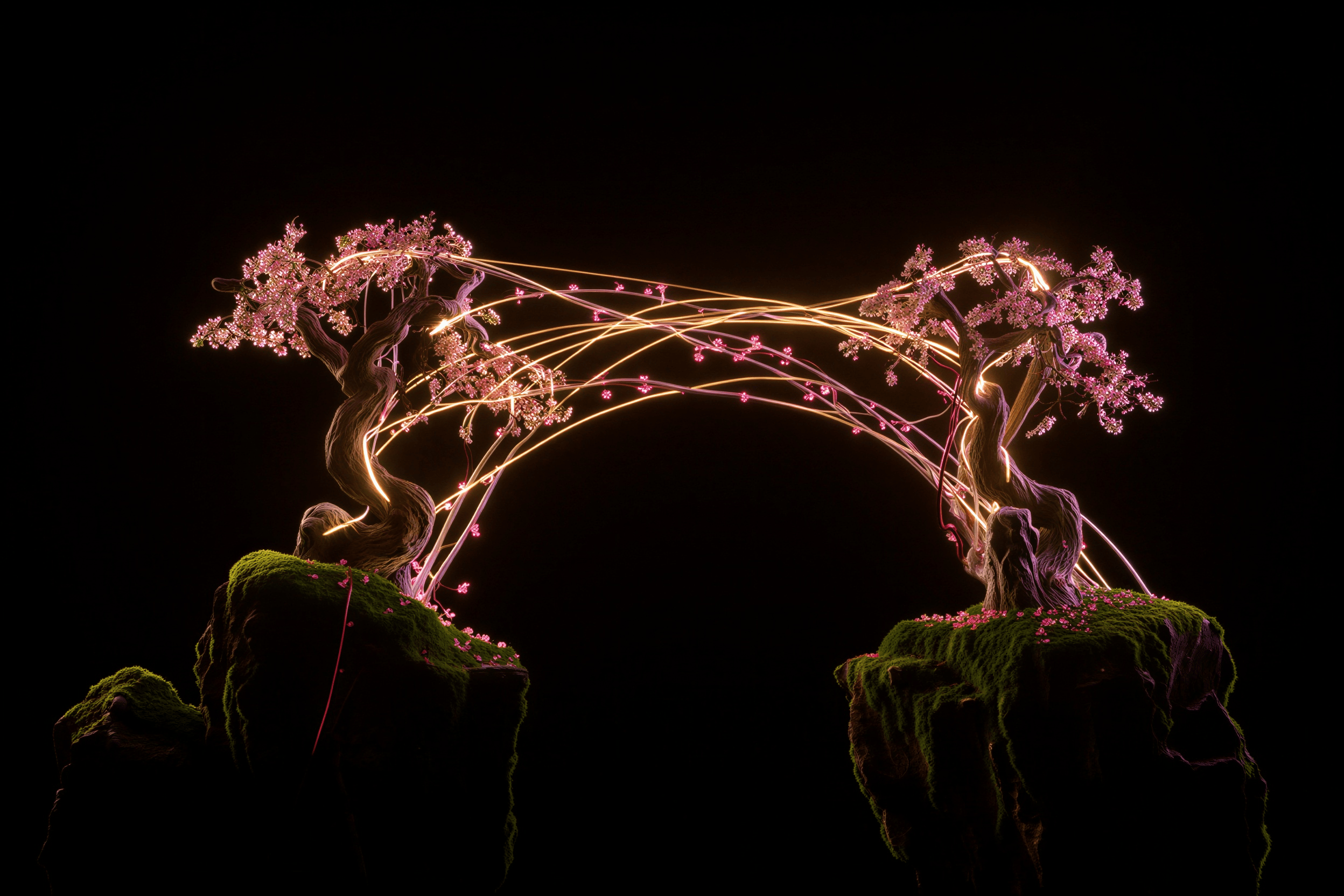
Built for systems
that act in the world.
AI Agents
Persistent identity, project history, preference models, and decision records — across every conversation, session, and deployment. Agents that remember who you are.
Robotics
Spatial maps of environments, learned object locations, interaction histories with humans, and procedural skills built from thousands of real executions.
Autonomous Vehicles
Historical route memory, intersection behaviour patterns, hazard recognition from prior encounters, and temporal awareness of road conditions.
Humanoid Systems
Social context, personal routines, long-term relationships, and accumulated physical skills — the full memory profile of an agent living and working alongside humans.
Virtual Worlds
NPCs that remember prior conversations, world events with permanent consequences, and characters that develop through experience rather than scripted states.
Personal AI
An assistant that builds a model of who you are over months and years — your goals, your decisions, your context — while remaining fully transparent and under your control.

Where we are heading.
Memory Primitives
Core memory object schema, typed memory classes, confidence scoring, temporal metadata, entity relationships, basic recall.
Memory Engine
Hybrid retrieval, context-aware ranking, reinforcement, revision, decay, and active forgetting.
Cognitive Layer
Consolidation pipelines, episodic-to-semantic transformation, spatial engine, procedural skill extraction.
SDKs & Integration
Agent SDK, Robotics SDK, multi-agent shared memory, world-model integration.
Early Access
Join the waitlist.
We're opening limited developer access for Phase 1.